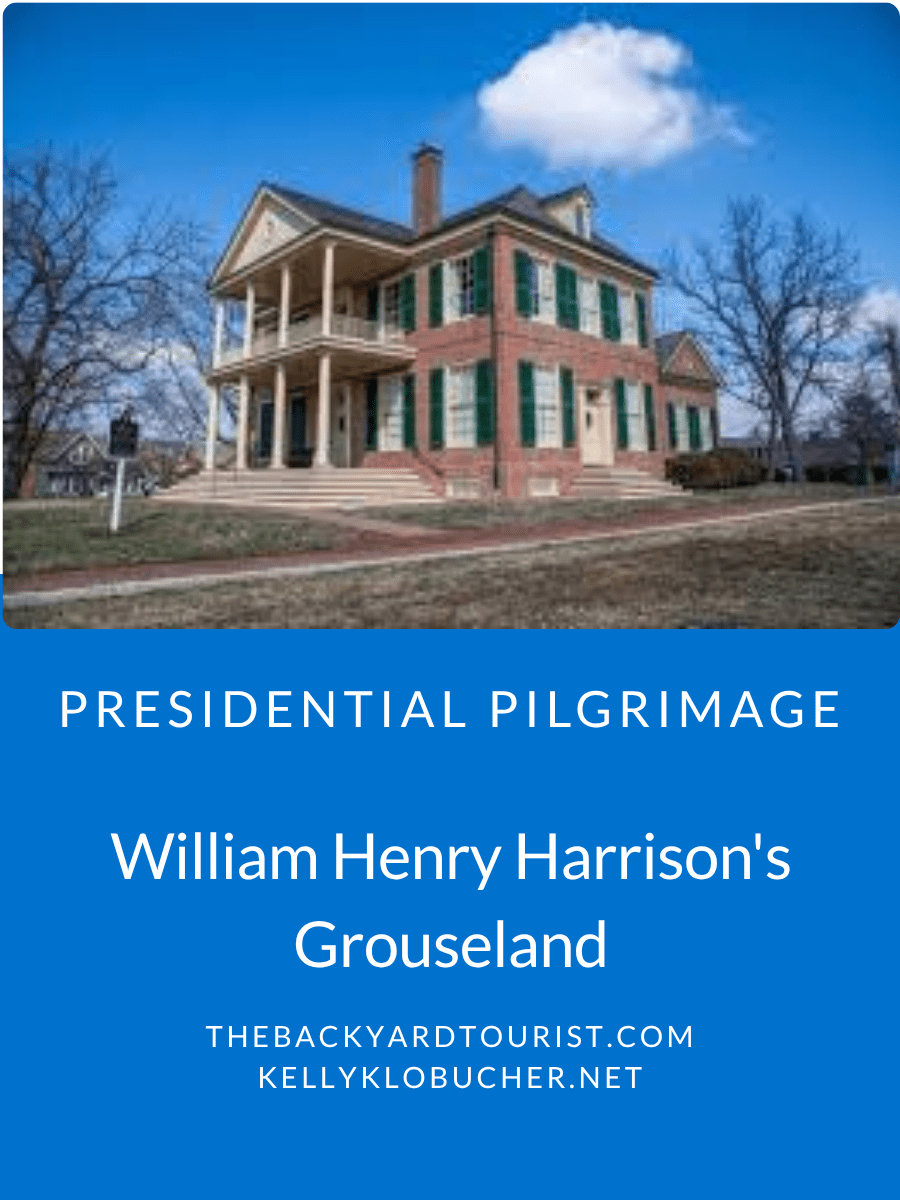
Vincennes, Indiana feels like a threshold town. And that’s exactly what it was.
This was my very first stop on my new quest to visit as many presidential sites as possible. I couldn’t have picked a more fitting beginning than Grouseland, the home of William Henry Harrison.
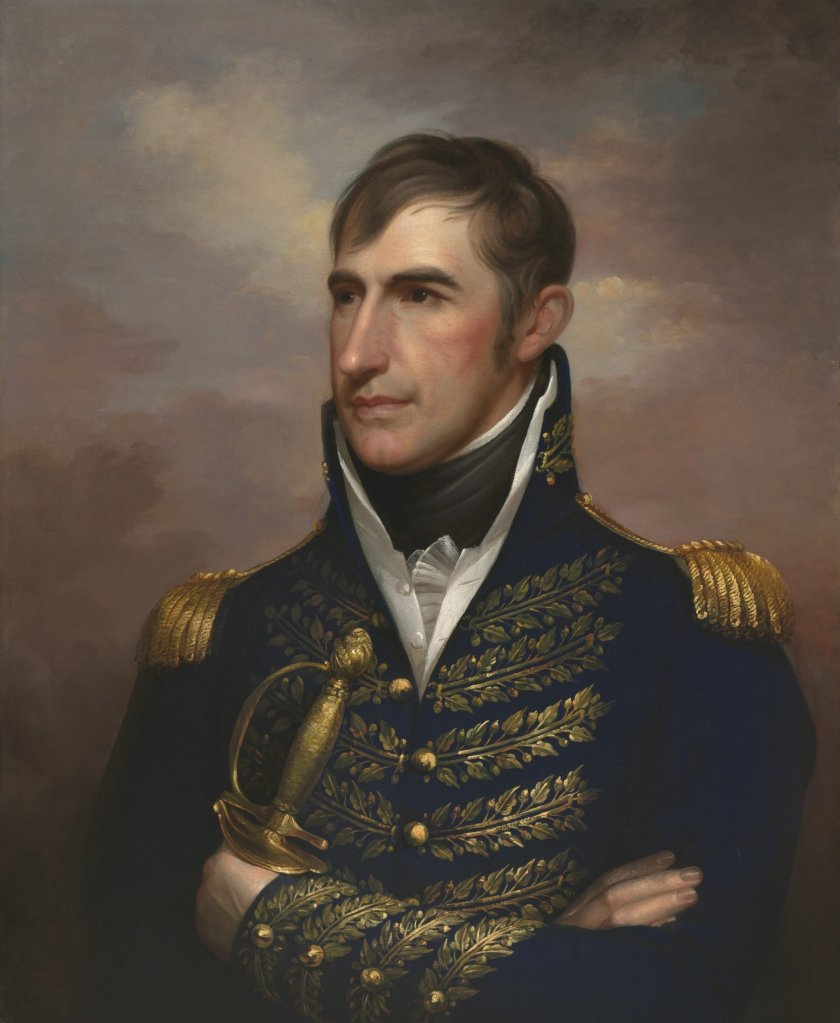
The Man Behind the Brick Walls
William Henry Harrison was a frontier governor. This was before the campaign slogan and the log cabin mythology. Before the “Tecumseh Curse” of urban legend. He governed a brand-new American territory from a brick house on the edge of the wilderness. This was also before he was the answer to two trivia questions:
- Who had the shortest presidency in US History? William Henry Harrison. 31 Days.
- Who had the longest inaugural address in US History? William Henry Harrison. 8445 words. Nearly two hours long. Historians often cite that the long speech contributed to his death. The damp, cold weather was also a factor. He died of pneumonia 31 days later.
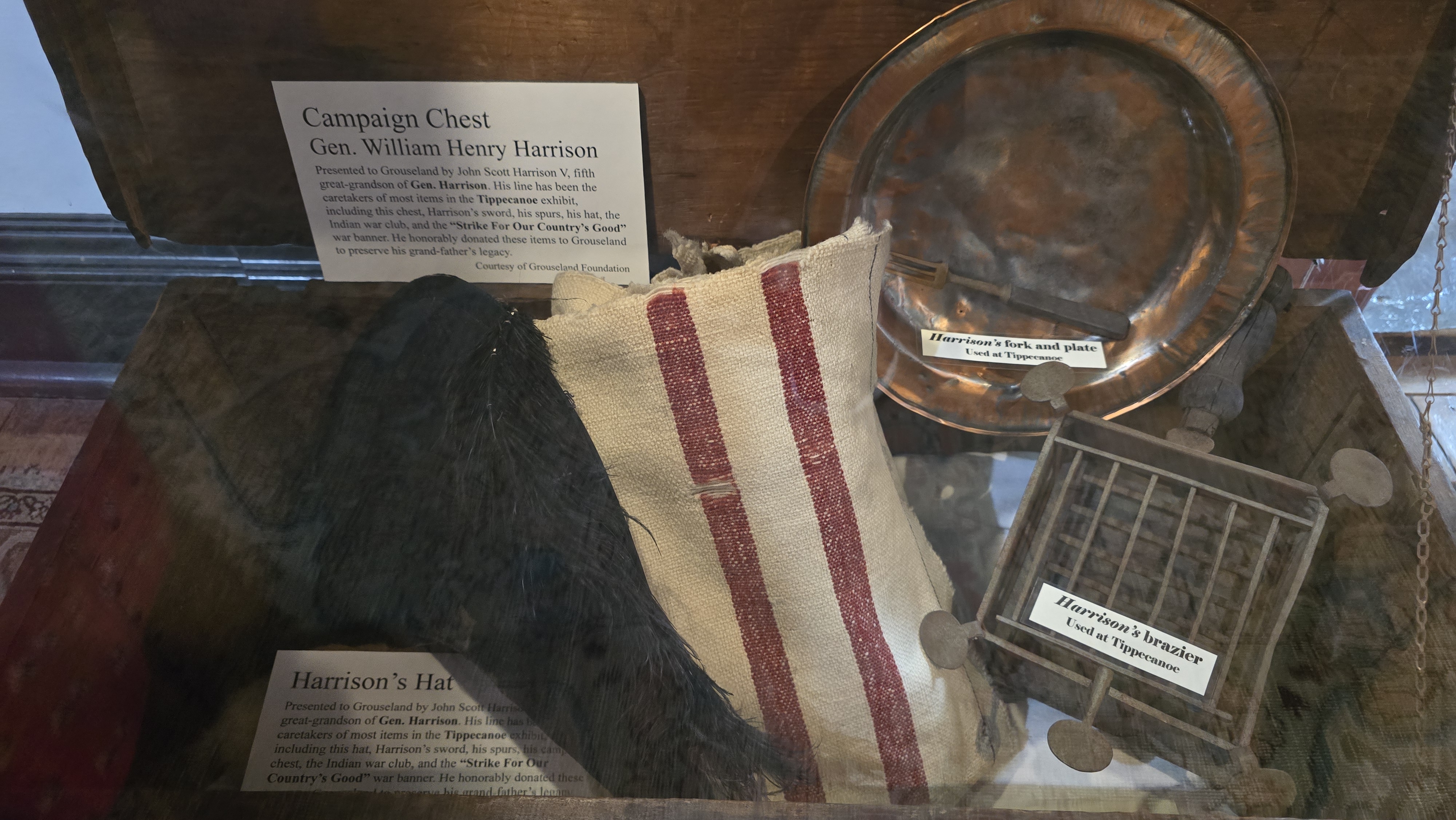
Born in Virginia in 1773 to a prominent political family, his father was friends with George Washington and a signer of the Declaration of Independence — no pressure, right? Harrison headed west as a young man and built his reputation in military and territorial leadership. He became the first governor of the Indiana Territory in 1801. He was responsible for organizing land and negotiating treaties. He also established civil government in what was then the western edge of the United States.
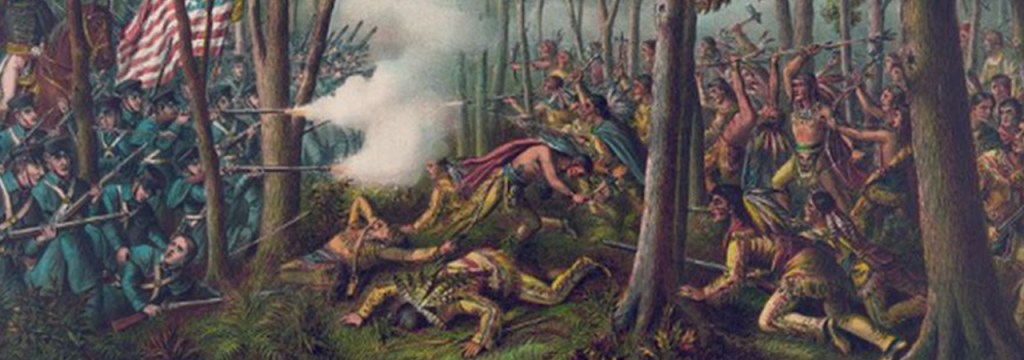
And here’s where visiting Grouseland makes it real: this wasn’t abstract policy work happening in a distant capital. Harrison was negotiating with Native American leaders. He was signing treaties. He was governing from a house that doubled as a fortress, mansion, and statehouse—all at once.
His military fame came later, particularly after the Battle of Tippecanoe in 1811, which earned him the nickname “Old Tippecanoe.” That reputation propelled him into national politics and eventually to the presidency in 1841. His campaign — “Tippecanoe and Tyler Too” — leaned hard into frontier imagery. It cast him as a log-cabin war hero, even though he was born into privilege.
And then, just as quickly, it ended. Harrison delivered the longest inaugural address in U.S. history on a cold March day without a coat. A month later, he was dead from illness, serving just 31 days — the shortest presidential term in American history.
But standing in his home in Vincennes, I didn’t think about the 31 days.
I thought about the decades before that. There was ambition, negotiation, and the calculated building of authority on a literal frontier. History often flattens people into headlines. Visiting presidential sites reminds me that before they were heros in textbooks, they were complicated humans. They were in specific places, making consequential decisions.
And in Harrison’s case, those decisions echoed far beyond the banks of the Wabash River.
I purposely didn’t study much on the history of Grouseland before I went. I had listened to a podcast on Harrison on the drive down. I knew Harrison was governor of the Indiana Territory before he became president. I knew the War of 1812 headlines. And, of course the Tecumseh Curse Urban legend, but I didn’t realize the curse was connected to this particular president.
But being there? That changed everything.
Location Is Everything
Vincennes sits just across the Wabash River from Illinois. Today, you barely notice crossing the state line. In fact, It felt like I drove through Illinois forever (five hours). I presumed I was already in Indiana. I was surprised when my GPS welcomed me to Indiana as I crossed the Wabash River.
But in 1804? This was the edge of America.
Harrison was the first governor of the Indiana Territory. His house stands right at the border of what was then newly acquired land. When you stand on the lawn at Grouseland, you can feel it — this wasn’t Washington. This wasn’t Philadelphia. This was the frontier.
And that proximity to the border wasn’t accidental. It was strategic. This house marked authority in a region that was still being defined, negotiated, and contested.
You don’t fully grasp that from a textbook. You feel it when you see how close Illinois is — just across the water. In fact, my GPS “welcomed” me to Indiana as I crossed the bridge over the Wabash River.
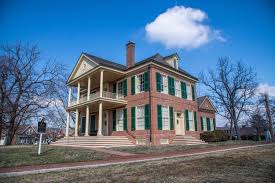
A Mansion That’s Also a Fortress
From the outside, Grouseland looks refined. Brick. Symmetrical. Federal-style elegance. But my wonderfully passionate docent pointed out something I would have completely missed: This place was built like a fort. Thick brick walls. Defensive positioning. Solid construction meant to protect not just the governor’s family but others who might need shelter in case of attack. This was a period of tension and uncertainty. The frontier wasn’t calm.
Grouseland had to be impressive — but it also had to be secure. That dual purpose is something you can only understand when you walk through it. The structure feels substantial. Protective. Intentional.
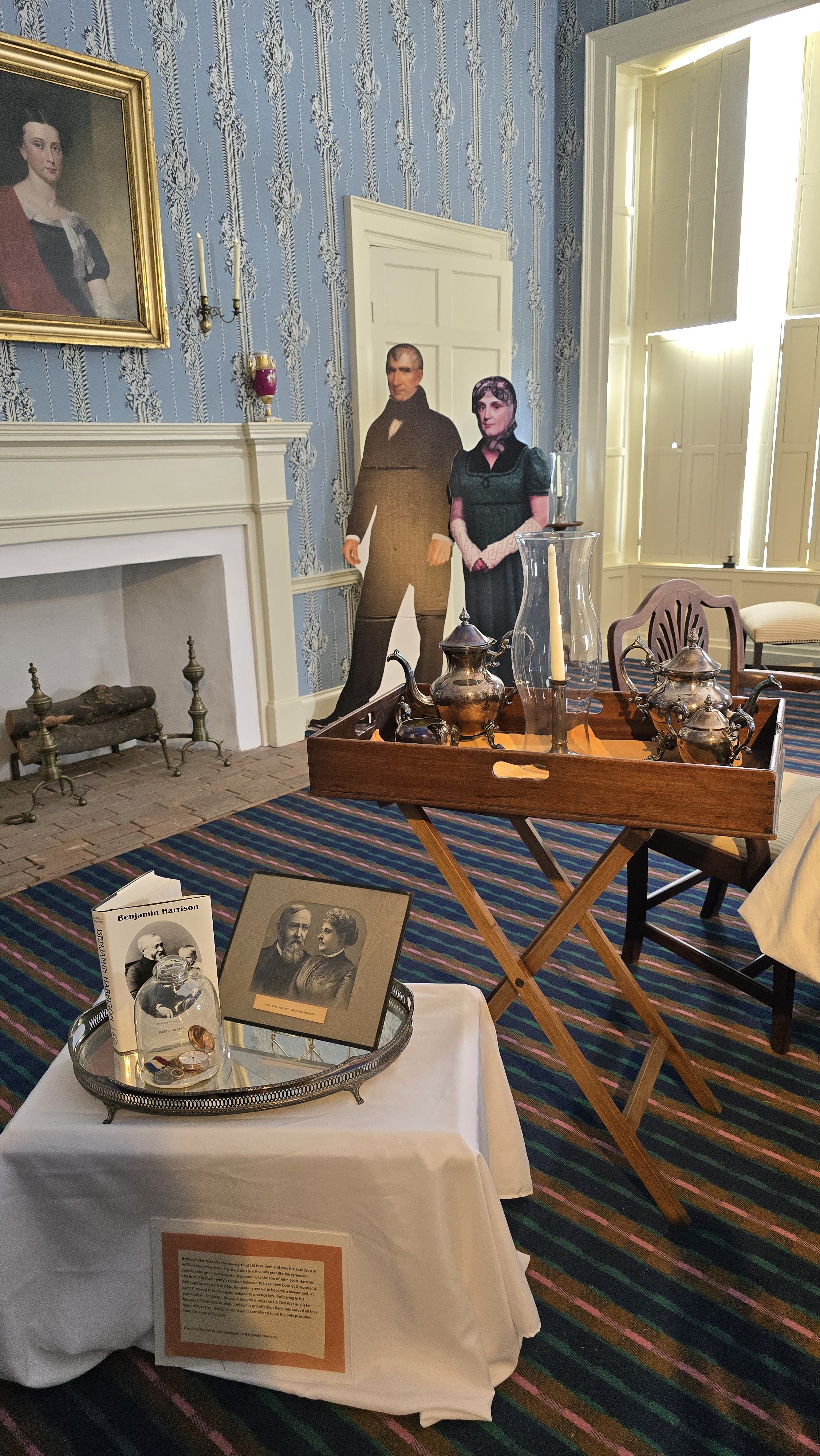
The Governor’s Mansion of the Territory
And yet… it also had to sparkle. Because this wasn’t just a home. It functioned as the territorial governor’s mansion. Harrison entertained here. Hosted leaders. Conducted formal gatherings.
You can imagine the candlelight in the parlor. The careful choreography of political dinners. The weight of conversation over polished wood tables.
On the frontier, presentation mattered. Authority had to look confident. And Grouseland absolutely does.
A Statehouse Before There Was a State
Here’s what really stopped me in my tracks: Grouseland wasn’t just a home or even just a mansion. It was effectively a statehouse. Important treaties were signed here. Official territorial business was conducted here. Documents that shaped the expansion of the United States were negotiated within these walls.
In this brick house on what was then the edge of the country, decisions were made. These decisions would ripple outward for generations. You stand in those rooms and realize: history didn’t always happen in domed capitols. Sometimes it happened in someone’s dining room. Important documents were signed on that cool old desk in the corner.
The Docent Effect
Because my visit took place on a snowy day in February, I was the only person on my tour. This is good. I have long stated that NOBODY should be subjected to a Historic House Museum tour with me. As a proud museum person, I have been told that I am somewhat…too enthusiastic about historic preservation. Visiting a house museum with me is a true test of friendship. Very few friends are up to that challenge, and those that survive are lifers!
On this trip, I had one of those fantastic docents — the kind who clearly loves this place. The kind who answers questions before you know you’re going to ask them. The kind who makes you look at a door hinge or a crack in a wall differently. The kind who lives history for fun on the weekends, not just while doing museum work. She does this by dressing up as a re-enactor. She shared that she cooked a traditional Christmas Dinner on a wood burning stove from the 1800’s over the holidays. She studies the historic food culture of the frontier. She is a great storyteller. She pointed out all of the little things that she loves about the house. Her stories made me love it too.
Museums are my love language, and this one delivered.
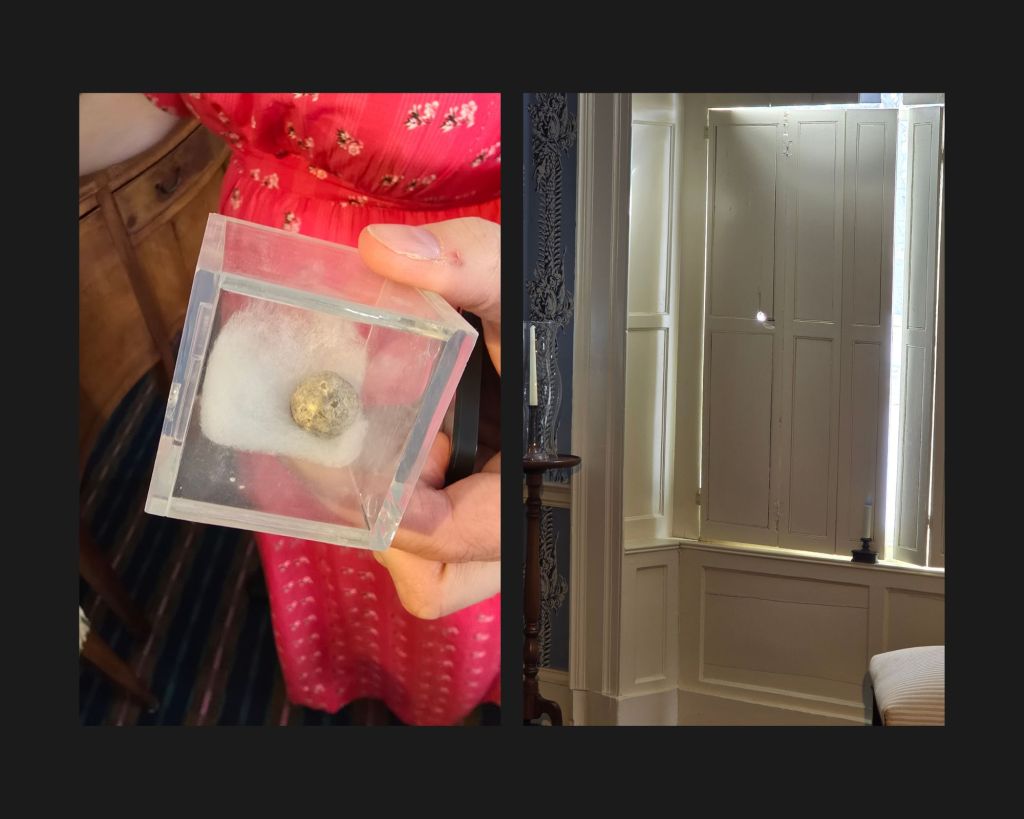
The Legend vs. The Facts
The Story: According to local lore in Vincennes, Indiana, a musket ball was fired into Harrison’s home (called Grouseland) while he was eating dinner, narrowly missing him. [1, 2]
The Reality: Many historians believe the shot might have been an accidental discharge or a random bullet from the wilderness, rather than a planned plot to take his life.
The Mystery: The physical musket ball and the damaged window shutter were a popular exhibit at Grouseland for years. The bullet went missing, but it was mysteriously returned anonymously to the museum in 2022.
Road Trip Notes
- Podcast pairing: Plodding Through the Presidents
- Coffee stop: Always find the local place, never the chain.
- Books: William Henry Harrison
This was my first presidential site visit since challenging myself to visit a whole list I made over the next 5 years.
And I already understand something I didn’t before:
Presidents aren’t just marble statues and big libraries. They are not heroes. They are not perfect, infallible people. They are humans making decisions with whatever information they have.
Sometimes they are frontier governors in brick houses at the edge of a river, trying to stitch together a brand-new piece of America.
One tank of gas.
One two-lane road.
One historic house at a time.
Next presidential stop — where should I go?
 The Backyard Tourist
Leave a comment