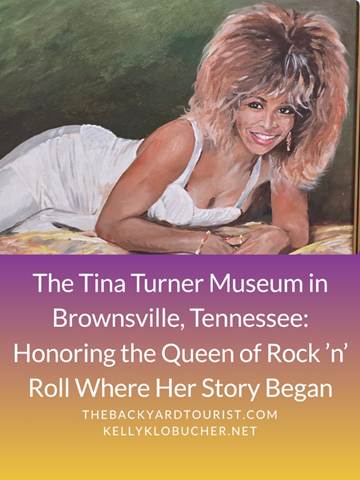
For fans of American music history, few places feel as personal—or as powerful—as the Tina Turner Museum in Brownsville, Tennessee. Housed inside a restored one-room schoolhouse that Tina Turner herself attended as a child, the museum is more than a tribute to a superstar. It is a story about roots, resilience, and the long road from rural West Tennessee to global stardom.

Located at the West Tennessee Delta Heritage Center in Brownsville, the Tina Turner Museum preserves both the legacy of one of the most electrifying performers of the twentieth century and the place that helped shape her. It is intimate rather than flashy, grounded in local history rather than celebrity spectacle, and that is precisely what makes it so moving.
A Museum Inside Tina Turner’s Childhood School
The museum is housed in Flagg Grove School, a small school building from the rural Nutbush community where Tina Turner—born Anna Mae Bullock in 1939—attended classes as a child. The school originally stood near Nutbush and served local Black students during the era of segregation. After years of deterioration, the building was saved, relocated, and restored, eventually becoming the world’s only museum dedicated exclusively to Tina Turner.
That setting matters. This is not a museum built around fame after the fact; it is a museum rooted in the actual landscape of Turner’s early life. Visitors are not just looking at memorabilia. They are stepping into a structure connected to the childhood of a woman who would go on to redefine rock performance, survive extraordinary hardship, and reinvent herself on a global stage.
From Nutbush to the World Stage
Before she was Tina Turner, she was Anna Mae Bullock, growing up in the farming community of Nutbush in Haywood County. Her father worked as an overseer on a farm, and Turner later recalled picking cotton as a child. She sang in church, attended Flagg Grove School, and spent her early years in a world far removed from the stadiums and sold-out arenas she would one day command.
The museum does an excellent job of connecting those humble beginnings to the force of nature she later became. Exhibits include costumes, gold records, photographs, awards, and personal memorabilia, but the real power of the museum lies in what those objects represent: a life of reinvention. Tina Turner’s story is not simply one of talent. It is also one of determination, survival, and the refusal to be defined by circumstance.

A Small Museum With Big Emotional Impact
The Tina Turner Museum is not large, but it does not need to be. In many ways, its modest scale is part of its strength. Standing inside a preserved rural schoolhouse while looking at artifacts from Turner’s international career creates a striking contrast between where she began and where she ended up.
That contrast makes the museum especially meaningful for travelers who care about the full story behind a famous name. This is not just a collection of stage costumes and gold albums. It is a place that underscores how extraordinary Turner’s rise really was. She did not emerge from an industry machine or a glamorous music capital. She came from rural West Tennessee, from a segregated schoolhouse, from a childhood marked by both musical promise and personal hardship.

Why the Museum Matters
The Tina Turner Museum matters because it preserves more than celebrity history. It preserves Black educational history, regional history, and the story of one of the South’s most influential cultural figures in the place where that story began.
Flagg Grove School itself is an important artifact, representing the educational experiences of Black children in rural Tennessee in the late nineteenth and early twentieth centuries. By preserving the building and interpreting Tina Turner’s life through it, the museum tells a broader story about place, race, opportunity, and perseverance in the American South.
It also anchors Turner’s legacy in her hometown rather than in the larger cities that later claimed parts of her story. Brownsville and Nutbush are not just footnotes in her biography; they are essential to understanding the woman behind the legend.

Planning a Visit
The Tina Turner Museum is part of the West Tennessee Delta Heritage Center in Brownsville, about an hour northeast of Memphis and just off Interstate 40. The Heritage Center also includes exhibits on regional music, cotton, and the Hatchie River, making it a worthwhile stop even for travelers who only know Tina Turner from a greatest-hits playlist.
For Backyard Tourists, this is the kind of place that rewards curiosity. It is not overproduced, and it is not trying to compete with the mega-attractions of Nashville or Memphis. Instead, it offers something better: context. It gives visitors a deeper understanding of how place shapes people, how talent can rise from unlikely circumstances, and how preserving a humble building can tell a much bigger American story.

Read Before (or After) You Visit, or listen on the road!
I, Tina by Tina Turner and Kurt Loder
This is the definitive autobiography and the foundation for much of what people know about Tina’s life. It honestly recounts her childhood in rural Tennessee, her rise with Ike Turner, years of abuse, and remarkable reinvention as a global superstar.
Why read it?
Visitors will recognize many artifacts and stories from the museum and better understand how extraordinary her journey truly was.
Tina Turner: My Love Story
Written later in life, this memoir focuses less on her struggles and more on finding happiness, love, spirituality, and peace after leaving the music industry.
Why read it?
It shows Tina not just as a performer, but as a survivor who intentionally built a fulfilling second act.
Listen on the Drive
A road trip deserves a soundtrack.
Essential Tina Turner Playlist
- Proud Mary
- River Deep – Mountain High
- What’s Love Got to Do with It
- Better Be Good to Me
- Private Dancer
- We Don’t Need Another Hero
- The Best
- Steamy Windows
- Nutbush City Limits
- I Don’t Wanna Fight
If you’re driving through West Tennessee, “Nutbush City Limits” takes on a whole new meaning after seeing the landscape where Tina grew up.
Albums Worth Revisiting
- Private Dancer (1984) – the comeback that transformed Tina into an international solo superstar.
- Break Every Rule (1986) – demonstrates that her success was no one-album phenomenon.
- Foreign Affair (1989) – includes “The Best,” one of her signature recordings.
- Twenty Four Seven (1999) – her final studio album before retirement.
Watch After Your Visit
What’s Love Got to Do with It
Based largely on I, Tina, the film stars Angela Bassett in an Academy Award-nominated performance as Tina Turner and Laurence Fishburne as Ike Turner.
Watching it after touring the museum helps distinguish the dramatized scenes from the documented history presented in the exhibits.
Tina
This acclaimed documentary features archival footage and interviews with Tina herself, reflecting on her career and legacy.
It’s perhaps the best companion piece to a museum visit because Tina tells her own story.

A Backyard Tourist Take
One of the pleasures of visiting the Tina Turner Museum is realizing that greatness can begin in the most unexpected places. The museum preserves a one-room schoolhouse in rural Tennessee, reminding visitors that international icons don’t always come from famous cities or wealthy backgrounds. By reading Tina’s memoirs, listening to her music on the drive home, and watching the documentary afterward, your museum visit becomes more than a stop on a road trip—it becomes an immersive journey through the life of one of the most resilient and influential performers in American music history.
The Tina Turner Museum is one of those destinations that lingers with you after you leave. Part of that is Tina herself—her music, her resilience, her unmatched presence. But part of it is the setting. There is something profoundly moving about seeing the Queen of Rock ’n’ Roll honored not in a glitzy hall of fame, but in a small schoolhouse tied to her earliest years.
For travelers interested in music history, Black history, Southern history, or the stories of women who transformed American culture, the Tina Turner Museum is worth the detour. It is a reminder that greatness often begins in ordinary places—and that sometimes the most powerful museums are the ones that connect a global legacy back to a single room, a single road, and a small Tennessee community that still claims her story.
Leave a Reply