“People don’t just visit places—they visit stories.”
Drive through America long enough and you’ll begin to notice something remarkable.
One small town becomes synonymous with Superman. Another celebrates giant everyday objects. One embraces its haunted reputation, while another transforms a local legend into an annual festival that attracts thousands of visitors.
These aren’t accidents.
They’re communities that discovered one of tourism’s greatest truths: when you become memorable, you become a destination.
In an era when travelers can choose from countless places to visit, small towns are finding success by leaning into what makes them unique. Whether it’s history, folklore, pop culture, architecture, industry, or even a little bit of whimsy, a strong community identity can turn an overlooked town into a thriving tourism destination.
Here are some of America’s best examples—and what every community can learn from them.

Home of Superman
No town has embraced a fictional superhero quite like Metropolis.
Home to the Superman statue, the Super Museum, annual Superman Celebration, themed businesses, and public art, Metropolis transformed a shared name into an international attraction.
Visitors don’t simply stop for a photograph.
They spend the day exploring downtown, shopping, dining, attending events, and visiting museums.
Lesson:
If your community has a unique name, embrace it.
A single recognizable identity can become the foundation for an entire tourism economy.

Big Things in a Small Town
Casey proved you don’t need mountains or beaches to attract visitors.
Instead, the town built enormous versions of everyday objects—from the world’s largest rocking chair and mailbox to giant knitting needles, golf tee, wind chime, and pencil.
Each attraction encourages visitors to walk throughout downtown, discovering shops, restaurants, and additional attractions along the way.
The experience turns a quick roadside stop into several hours of exploration.
Lesson:
Create reasons for visitors to keep walking.
The longer visitors stay, the more likely they are to eat, shop, and spend money locally.

UFO Capital of America
Whether visitors believe the stories or not hardly matters.
Roswell embraced its extraterrestrial identity through museums, public art, themed businesses, annual festivals, and playful branding. Even their McDonald’s looks like a UFO!
The result is a tourism economy built around curiosity.
Visitors arrive because they’re intrigued.
They leave with memorable experiences.
Lesson:
Mystery sells.
Communities with unusual stories shouldn’t hide them.

Witch Trials and Haunted History
Few communities have embraced a darker chapter of their past as effectively as Salem.
Known worldwide for the 1692 witch trials, Salem has transformed its history into a year-round tourism draw through museums, historic sites, walking tours, and immersive experiences that explore both the tragedy and the mythology surrounding the events.
Each October, the city becomes a major destination during its Haunted Happenings festival, attracting hundreds of thousands of visitors with parades, performances, and themed events.
While the spooky branding draws attention, Salem also balances its identity with maritime history, architecture, and cultural institutions that deepen the visitor experience.
Lesson:
Even difficult history can become a powerful tourism asset when interpreted thoughtfully and responsibly.

America’s Antique Capital (and More)
Long before television introduced audiences to American Pickers, LeClaire had already built a reputation as a Mississippi River town filled with antique shops, river history, and charming downtown streets.
The popularity of the television show added another attraction, but the town’s appeal extends well beyond one business.
Visitors stroll downtown, explore local shops, visit museums, and enjoy riverfront dining.
Lesson:
Television exposure helps—but authentic community character keeps visitors coming back.

Pella, Iowa
A Taste of the Netherlands
Windmills.
Tulips.
Dutch architecture.
Pastries.
Pella transformed its Dutch heritage into one of the Midwest’s most recognizable cultural destinations. The town has design guidelines for even large chain stores and restaurants to abide by. Even the Walmart Supercenter is designed to reflect the town esthetic.
Its annual Tulip Time festival draws visitors from around the world, but the community’s identity is evident year-round through architecture, shops, museums, and public spaces.
Lesson:
Celebrate your heritage.
Authenticity resonates with travelers.

Amish Country
Rather than modernizing its identity, Shipshewana leaned into its Amish heritage.
Markets, handmade furniture, quilts, horse-drawn buggies, local food, and slower-paced experiences attract visitors seeking something increasingly rare—simplicity.
Lesson:
Not every attraction needs technology.
Sometimes the experience itself is the attraction.

Christmas Lives Here
Every December, mail from around the world arrives for children addressed simply to Santa.
The town embraced its name through attractions, themed businesses, holiday traditions, and one of the nation’s best-known holiday postmarks.
Families visit because nowhere else feels quite like it.
Lesson:
Sometimes your greatest marketing asset is already on the map.

Free Ice Water and a Roadside Empire
What began as a struggling drugstore in the 1930s became one of the most famous roadside attractions in America.
Wall Drug built its reputation through relentless roadside advertising—thousands of signs promising free ice water, 5-cent coffee, and a welcome stop for weary travelers crossing the plains.
Over time, the business expanded into a sprawling complex featuring restaurants, shops, Western art, quirky attractions, and photo opportunities that draw millions of visitors each year.
Travelers often arrive out of curiosity—but stay longer than expected.
Wall Drug demonstrates how a simple idea, consistently promoted and expanded, can transform a single business into a destination that supports an entire community.
Lesson:
Creative marketing matters.
Sometimes the journey to your town begins hundreds of miles away.

From Logging Town to Bavarian Village
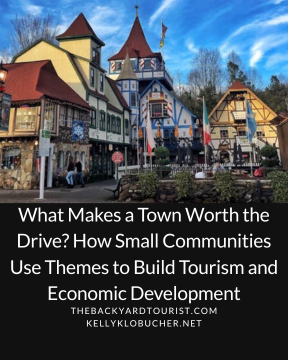
In 1969, facing economic decline after the collapse of its logging industry, Helen made a bold decision that would redefine its future.
The town reinvented itself as a Bavarian-style alpine village.
With the help of local artists and planners, buildings were remodeled with timber framing, decorative facades, and Old World architectural details. Streets were redesigned to reflect a cohesive European aesthetic, and businesses embraced the theme through signage, menus, and merchandise.
Today, Helen is one of the Southeast’s most recognizable themed destinations.
Visitors come for Oktoberfest celebrations, German-inspired cuisine, festivals, river tubing, and a walkable downtown that feels transported from another continent.
What began as an economic survival strategy became a long-term tourism success story.
Lesson:
A community can reinvent itself.
With vision, commitment, and consistency, even a struggling town can create an entirely new identity that attracts visitors for generations.
What These Towns Have in Common
Despite their differences, these destinations share several important characteristics.
They don’t rely on a single attraction.
Instead, they build an entire visitor experience.
Successful themed communities typically include:
- Museums that tell deeper stories
- Public art perfect for photographs
- Festivals that encourage repeat visits
- Walkable downtowns
- Independent restaurants and coffee shops
- Local retailers selling products visitors can’t buy elsewhere
- Historic preservation that creates authentic character
- Clear branding throughout the community
Every element reinforces the same story.
Museums Are Often the Heart of the Experience
One of the biggest misconceptions about tourism is that visitors only care about entertainment.
In reality, they crave authenticity.
Museums provide the historical context that gives a destination meaning.
They explain why Superman matters in Metropolis.
They preserve the agricultural heritage that shaped Casey.
They tell the stories behind local industries, architecture, and traditions.
Without museums, many themed communities become little more than photo opportunities.
With museums, they become meaningful destinations.
Economic Development Begins With Identity
Communities often ask,
“How do we attract tourists?”
A better question might be:
“What story are we uniquely qualified to tell?”
The answer may already exist.
Perhaps it’s a famous resident.
A forgotten industry.
A local legend.
A historic event.
An architectural style.
A natural feature.
Or simply an unusual name.
The communities that succeed don’t try to become someone else.
They become the best version of themselves.
The Backyard Tourist Takeaway
The next great road trip destination probably isn’t a place you’ve never heard of.
It’s a place that finally learned to tell its story.
As travelers, we benefit from communities willing to celebrate what makes them different.
As museum professionals and community leaders, we should remember that preservation isn’t just about protecting the past.
It’s about creating a future where visitors choose to stop, stay, and discover the stories that make every town worth the drive.
After all, every community has a story.
The most successful ones simply make sure the rest of us hear it.
Leave a Reply