Manteno, IL
An unexpected story of fashion, women’s history, historic preservation, and the power of creating opportunities for everyone.
There are places you visit because you love their collections. There are places you visit because you love their history. And then there are places that surprise you by offering something much more meaningful than you expected.

The Vintage Purse Museum in Manteno, Illinois, is one of those places.
Opened in July 2025, the museum occupies a circa-1928 administrative building associated with the former Manteno State Hospital. The organization is actively restoring and preserving this historic structure, giving the building a new purpose while creating space for an extraordinary collection.
I arrived expecting a fascinating look at handbags and the stories women carry with them. I found that, certainly. What I didn’t fully anticipate was how deeply the museum’s mission would resonate with me as a public historian and preservation enthusiast.
Because here, preserving places, people, and purses are all part of the same story.

A Collection That Carries Its Own Stories
Let’s start with the purses, because they are reason enough to plan a visit.
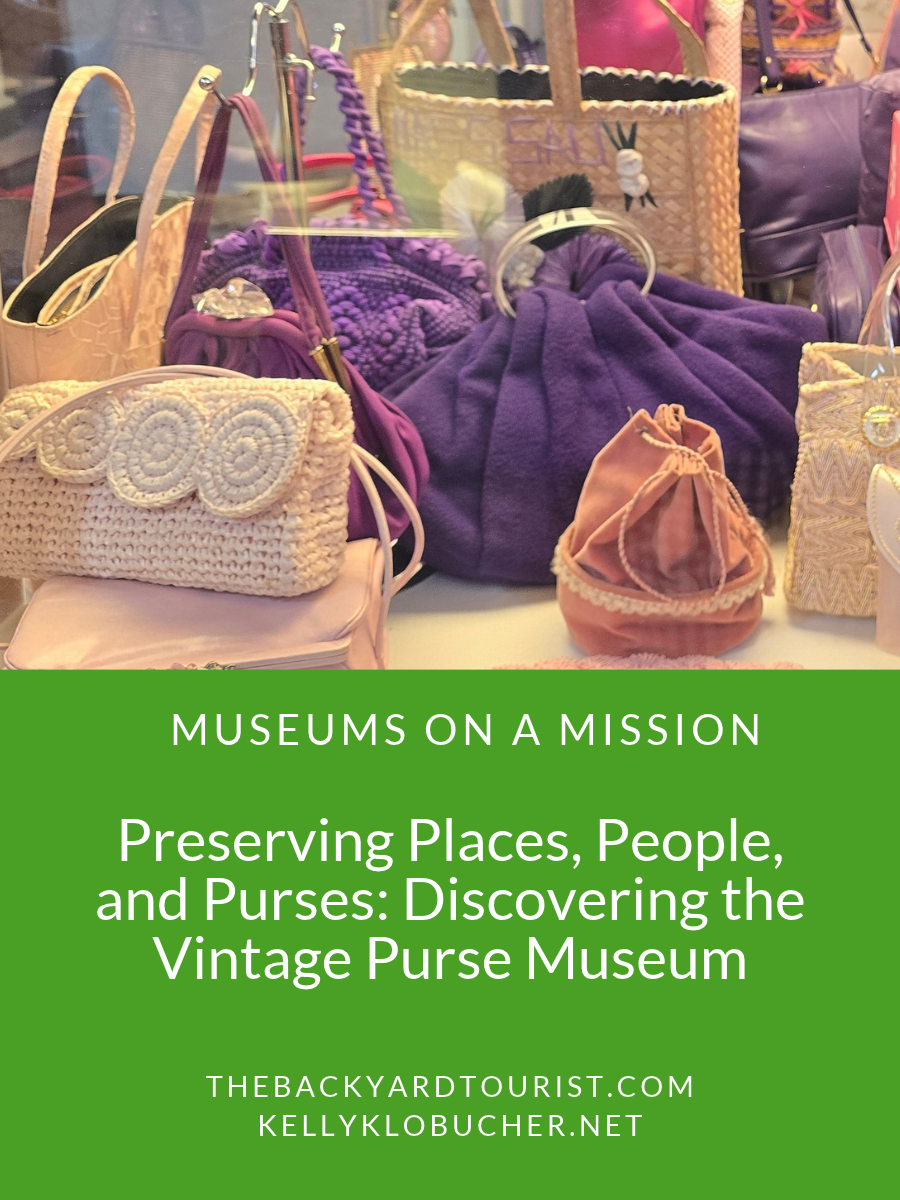
The collection is fantastic. Rare and unusual handbags, including pieces created by artisans, are thoughtfully displayed by decade of popularity and by theme. The exhibits invite you to look closely at the craftsmanship, materials, styles, and cultural influences that shaped what women carried—and how they carried themselves—through different eras.

Fashion is never just about fashion.
A handbag can tell us something about changing expectations for women, the materials available to designers, the influence of popular culture, and the ways people express their identities. These seemingly ordinary accessories become artifacts of everyday life, connecting us to the women who owned them and the worlds they inhabited.
And the museum has fun with that idea, too.

There is a Barbie room celebrating the iconic doll and her enduring influence on fashion and popular culture. A comic book room offers another unexpected angle on collecting and visual storytelling. And then there is a military room that I found particularly touching, offering a more personal perspective on the connections between material culture, service, sacrifice, and memory.
Each space has its own personality. Together, they demonstrate the remarkable range of stories that can emerge from a collection when objects are presented with thought and imagination.
I expected to find personal, women-centered stories, with the purses serving as artifacts that helped move those stories along.
And I did.
But the longer I spent at the museum, the more I realized that the objects were only one part of a much bigger picture.

When the Building Becomes Part of the Story
As a museum professional, I can’t visit a historic building without wondering about the people who occupied it before me.
The Vintage Purse Museum’s home carries a history of its own. Its location within the former Manteno State Hospital complex makes the preservation of this circa-1928 administrative building especially compelling.
Old institutional buildings can be challenging to preserve. Their original purposes may have disappeared, their stories can be complicated, and finding a sustainable new use isn’t always easy.
Here, the building is being given another chapter.
Rather than allowing a historic structure to become a forgotten remnant of the past, the museum is actively working to restore and preserve it. The result is a place where visitors can encounter an unusual collection while also engaging with the history embedded in the walls around them.
For those of us who care about historic preservation, that matters. Saving a building is not simply about retaining its architectural features. It is also about creating a future for the place, finding a meaningful use for it, and making sure its history remains part of the community’s story.
A quick drive through town shows just how massive the hospital once was. Many buildings remain in the neighborhood, several have been repurposed for new uses, including the Illinois Veterans Home.
And during my visit, the history of the institution led me to another woman whose story deserves to be remembered.

The History That Gave Me Goosebumps
Upon arriving, I experienced one of those moments when separate threads of history suddenly connect.
I thought about Elizabeth Packard, a nineteenth-century woman whose experiences illustrate the devastating consequences of giving husbands and institutions unchecked power over women’s lives.
Packard lived in Manteno and, in 1860, was wrongfully committed by her husband to the Jacksonville Insane Asylum. She spent three years confined there before eventually regaining her freedom.
Rather than allowing that experience to define the rest of her life, Packard became a scholar, author, and tireless advocate for legal reform and better treatment of people confined in mental institutions. She challenged the laws that allowed husbands to have their wives institutionalized against their will and worked to improve protections for people facing similar circumstances.

Her story is told in The Woman They Could Not Silence by Kate Moore, a book I strongly recommend to anyone interested in women’s history, civil rights, and the ways individuals have challenged unjust systems.
Packard’s story is a powerful reminder that the history of mental health institutions isn’t simply a story of buildings, medical practices, and administrative records. It is also a story about the people whose lives were shaped—and sometimes devastated—by those institutions.
FUN HISTORY FACT: In 2023, the state psychiatric hospital in Jacksonville, formerly named for Dr. Andrew McFarland, was renamed the Elizabeth Packard Mental Health Center. McFarland’s association with Packard’s confinement adds another layer to the significance of that change.
Standing at a museum housed within the former Manteno State Hospital complex, I couldn’t help thinking about the women whose experiences are part of this broader history.
Packard’s story and the Vintage Purse Museum’s mission are not the same story, of course. But they share a reminder that women’s lives, experiences, and contributions deserve to be seen, understood, and preserved.
That connection gave me goosebumps.
A Mission That Goes Beyond the Collection
The purses are wonderful. The exhibits are engaging. The historic building is worth preserving.
But one of the most meaningful things about the Vintage Purse Museum is what happens behind the scenes—and in front of visitors every day.
During our tour, Executive Director Kimberly Crothers spoke passionately about the organization’s workforce training program for people with disabilities.
Before the museum even opened its doors to the public, she had placed six people in employment.
Think about that for a moment.
The museum’s interns, docents, and artists contribute to the operation in a variety of ways. They greet guests, lead tours, create art, design exhibits, and help maintain the building. These are meaningful responsibilities that allow participants to develop practical skills, explore different interests, and gain experience in a supportive working environment.
Crothers has created a space where people can learn, contribute, and grow in confidence.
This is where the museum’s mission becomes particularly powerful.
Too often, conversations about workforce development focus on what people cannot do, the barriers they face, or the accommodations they might need. Programs that provide opportunities to learn by doing can change that conversation.
At the Vintage Purse Museum, participants have opportunities to be part of the work itself. They help welcome visitors, interpret history, contribute creatively, and keep the organization running.
They aren’t simply observing a museum. They are helping make it happen.
As someone who has spent much of her career developing museum programs, building teams, and thinking about how cultural institutions serve their communities, I found this especially meaningful.
Museums are uniquely positioned to create opportunities for learning and engagement. But their impact doesn’t have to stop with the visitor experience. They can also be places where people develop skills, discover their strengths, build relationships, and find a sense of belonging.
The Vintage Purse Museum demonstrates how a relatively specialized collection can support a much broader community mission.
And that, to me, is an important part of its story.

More Than a Museum About Handbags
What makes a museum meaningful?
Is it the rarity of its collection? The quality of its exhibits? The significance of its historic building? The stories it tells?
Of course, all of these things matter.
But I would argue that a museum’s impact also comes from what it makes possible.
The Vintage Purse Museum brings together several ideas that I believe are central to the future of cultural institutions.
Preservation gives historic places a future. By restoring and reusing the former hospital’s administrative building, the organization is helping ensure that this piece of Manteno’s history remains part of the community.
Collections make personal histories visible. The handbags, artwork, and themed exhibits invite visitors to explore the lives, interests, and experiences reflected in material culture.
Museums can create opportunities beyond their galleries. The workforce training program demonstrates how a cultural organization can support people with disabilities through practical experience, meaningful responsibilities, and a welcoming environment.
These aren’t separate accomplishments. They reinforce one another.
A restored building provides a home for a collection. The collection creates reasons for people to visit. Visitors support an active institution. And the institution provides opportunities for people to participate, contribute, and grow.
That’s a lot of good happening under one roof.
Put Manteno on Your Cultural Road Trip List
The Vintage Purse Museum is a reminder that some of the most interesting destinations aren’t necessarily the largest or most famous. Sometimes, the places that leave the strongest impression are those with a distinctive collection, a complicated history, and a mission that reaches beyond the exhibits.
Come for the vintage handbags. Spend time exploring the Barbie and comic book rooms. Don’t rush through the military room. Take a moment to appreciate the historic building and the work involved in preserving it.
And while you’re there, think about the people who make the museum possible—and the opportunities the organization is creating for its participants.
I left with an even greater appreciation for what a small cultural institution in a relatively small, rural, town (Approximately 9000 people) can accomplish when its collection, historic setting, and community mission work together.
The Vintage Purse Museum isn’t just preserving handbags. It is preserving a historic place, sharing stories that might otherwise go untold, and creating room for people to discover what they can do.
Preserving places, people, and purses.
Now that’s a mission worth celebrating.
Plan Your Visit
Vintage Purse Museum
Manteno, Illinois
Opened: July 2025
Located in a circa-1928 administrative building associated with the former Manteno State Hospital, the museum combines an extensive vintage purse collection with themed exhibits, historic preservation, and a workforce training program for people with disabilities.
Before heading out, check the museum’s official website or social media for current hours, admission information, and tour availability.
Note that every tour pays for one hour of the workers program. Please buy a ticket, or two. Spend money in the gift shop. Small museums, especially in small towns need our support!
The Backyard Tourist celebrates the museums, historic places, and unexpected stories that make the scenic route worthwhile.
The Scenic Route for the Culturally Curious.
Leave a Reply